LLMs for bioinformaticians
What they are useful for, how to work with them and where they can fail
18th September 2026
Demo — the same question, with and without tools
×
The same question, asked with and without a tool.
An R function sends the prompt to a model running locally on this laptop.
Is this right?
Press play to ask again, this time with a tool

LLMs are now integrated in many tools: MultiQC

The LLM doesn’t have to be a separate chat box. It can sit inside the tools you already use.
Seqera (2025) AI Summaries now available in MultiQC
Asking an LLM to annotate cells: impressive, but…
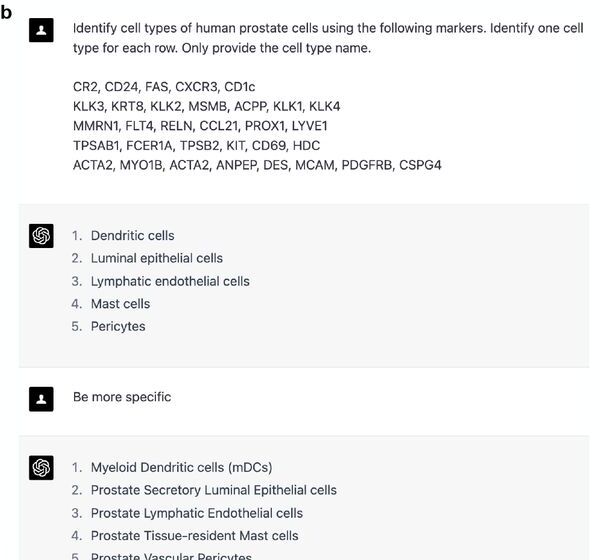
Would you know which clusters it got wrong?
| Manual annotation | GPT-4 answer | Agreement |
|---|---|---|
| Adipocyte | Adipocytes | Full |
| B cell_memory | B cells | Partial |
| Fibroblast | Fibroblasts | Full |
| Luminal Epithelial | Luminal epithelial cells | Full |
| Lymphatic Endothelial | Lymphatic endothelial cells | Full |
| Macrophage | Macrophages | Full |
| Mast Cell | Mast cells | Full |
| Pericyte | Pericytes | Full |
| Smooth Muscle | Smooth muscle cells | Full |
| T cell | T cells | Full |
| Vascular Endothelial | Endothelial cells | Partial |
One dataset shown. Across ten datasets, most cell types fully or partly matched the manual annotation.
Hou & Ji (2024) Assessing GPT-4 for cell type annotation in single-cell RNA-seq analysis. Nature Methods 21:1462-1465, Fig. 1b, 1e (cropped), CC BY 4.0
Getting an LLM to rewrite scientific software

RustQC — 15 RNA-seq QC tools reimplemented in Rust, built by someone who hadn’t written Rust before.
15 h 34 m → 14 m 54 s on ~186M paired-end reads.
edge* — edgeR → Python in about a week. Code written by Claude and Codex, direction and maths by a human.
Only useful because the outputs were compared against the original tools.
Seqera (2026) Introducing RustQC: 15 RNA-Seq QC tools in one pass, built with AI; Pachter (2026) Differential analysis of genomics count data with edge*, bioRxiv 2026.02.16.706223 · rewrites.bio — principles for AI-assisted rewrites of scientific software
My own work: from GEO free text to perturbMatch
GSE222598 Effect of SF3B4 depletion on gene expression of A549 lung cancer cell
| Sample title | genotype | treatment |
|---|---|---|
| A549 cells, si-NC, biol rep1 | WT | NC siRNA |
| A549 cells, si-NC, biol rep2 | WT | NC siRNA |
| A549 cells, si-NC, biol rep3 | WT | NC siRNA |
| A549 cells, si-SF3B4, biol rep1 | SF3B4 knockdown | SF3B4 siRNA |
| A549 cells, si-SF3B4, biol rep2 | SF3B5 knockdown | SF3B4 siRNA |
| A549 cells, si-SF3B4, biol rep3 | SF3B6 knockdown | SF3B4 siRNA |
The problem
- Thousands of gene perturbation experiments in GEO
- No field says which samples are the cases and which the controls
- Controls can be ctrl, wt, NC siRNA, empty vector …
- Even the metadata can be wrong: spreadsheet autofill
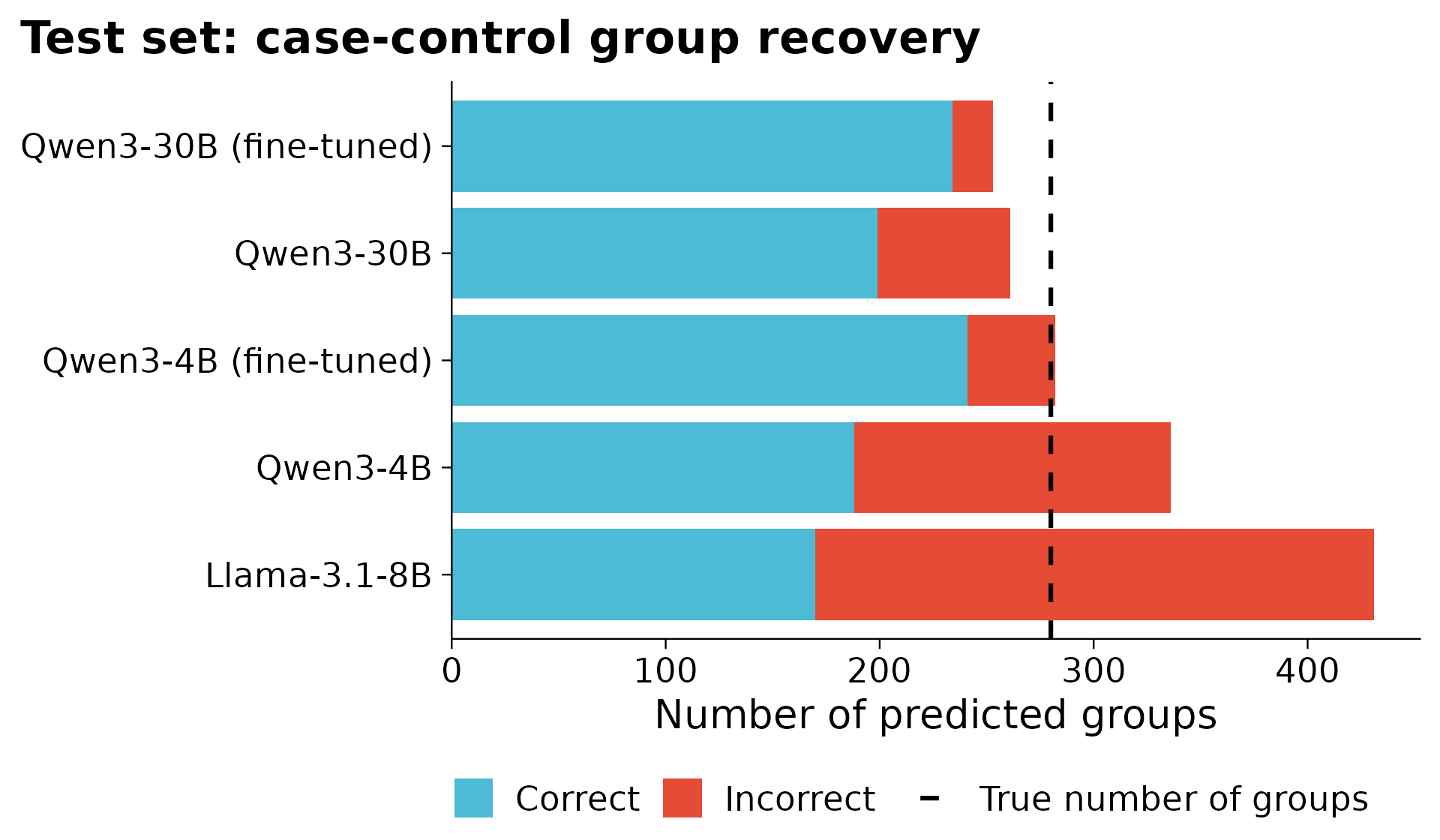
Fine-tune small local models
- Qwen3 4B and 30B, fine-tuned on 3,300 curated GEO series, on one GPU
- Held-out test set, released after 2023: precision 0.925, recall 0.836
- Small models without fine-tuning get many groups wrong (red)
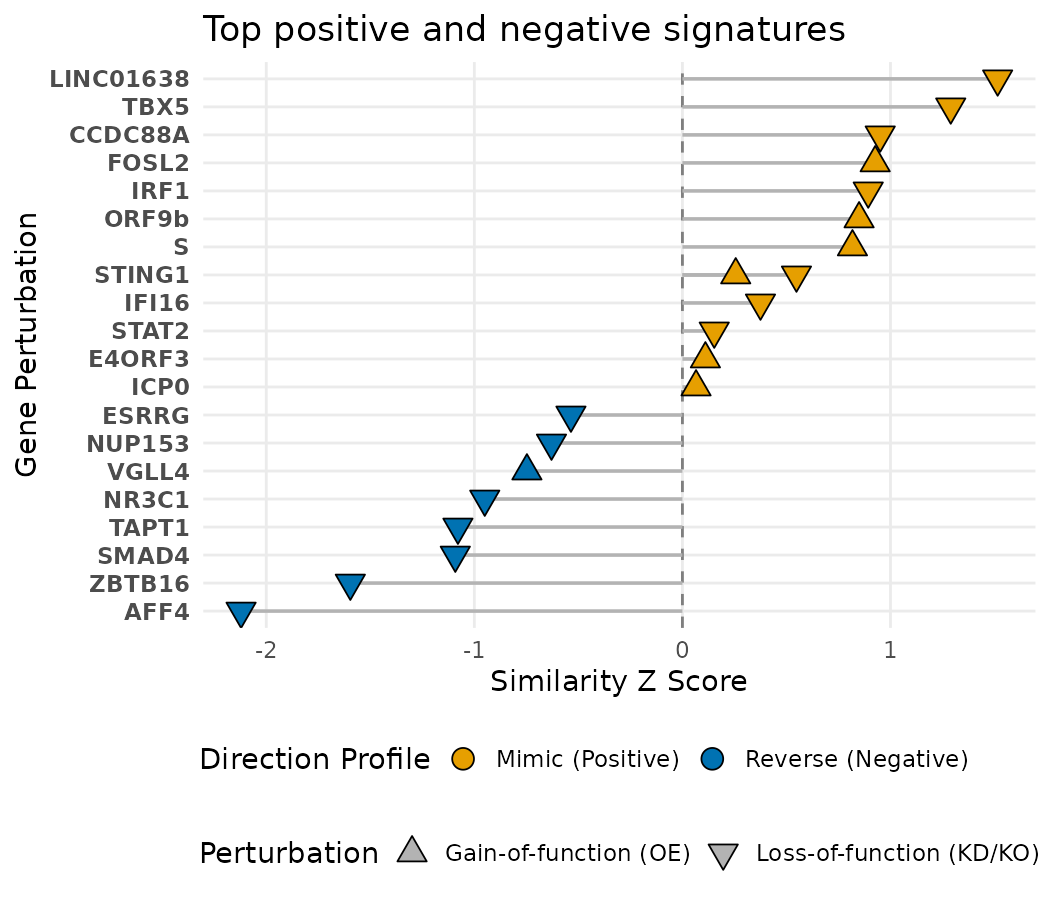
perturbMatch: give it your differential expression result, and it ranks the gene perturbations that mimic or reverse it.
6,802 signatures 4,453 GEO series 2,907 genes
Soul & Young (2026) bioRxiv 2026.08.08.743502, Fig. 3B · github.com/soulj/perturbMatch
What you know is important!
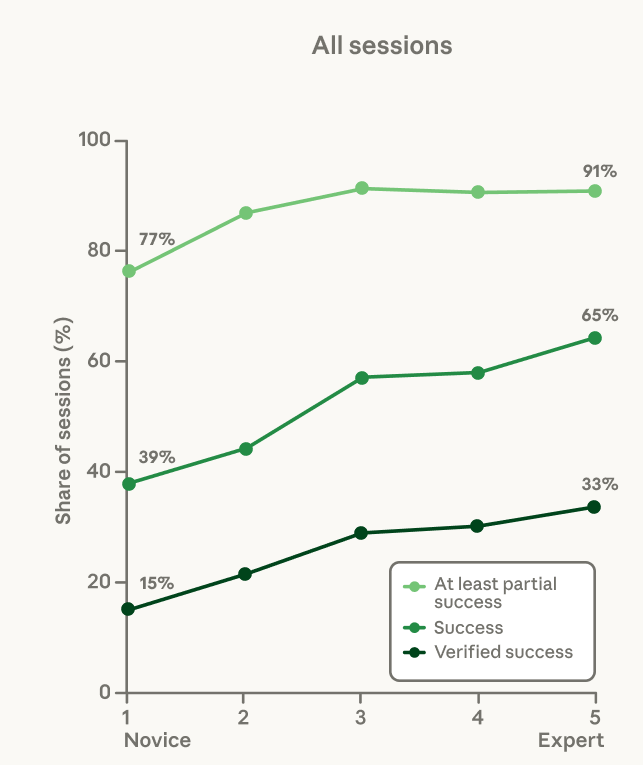
Anthropic classified ~400,000 real Claude Code sessions by how expert the user was at the task, not at programming.
Verified success: 15% of novice sessions, 28–33% once the user is intermediate or better.
Most of the gain is the novice intermediate step. After that the curve flattens.
Your biology, your data science, your knowledge of the data.
Hitzig et al. (2026) Agentic coding and persistent returns to expertise. Anthropic, Fig. 5 (left panel). ~400,000 sessions, ~235,000 users, October 2025 to April 2026.
Expertise shows most when it goes wrong
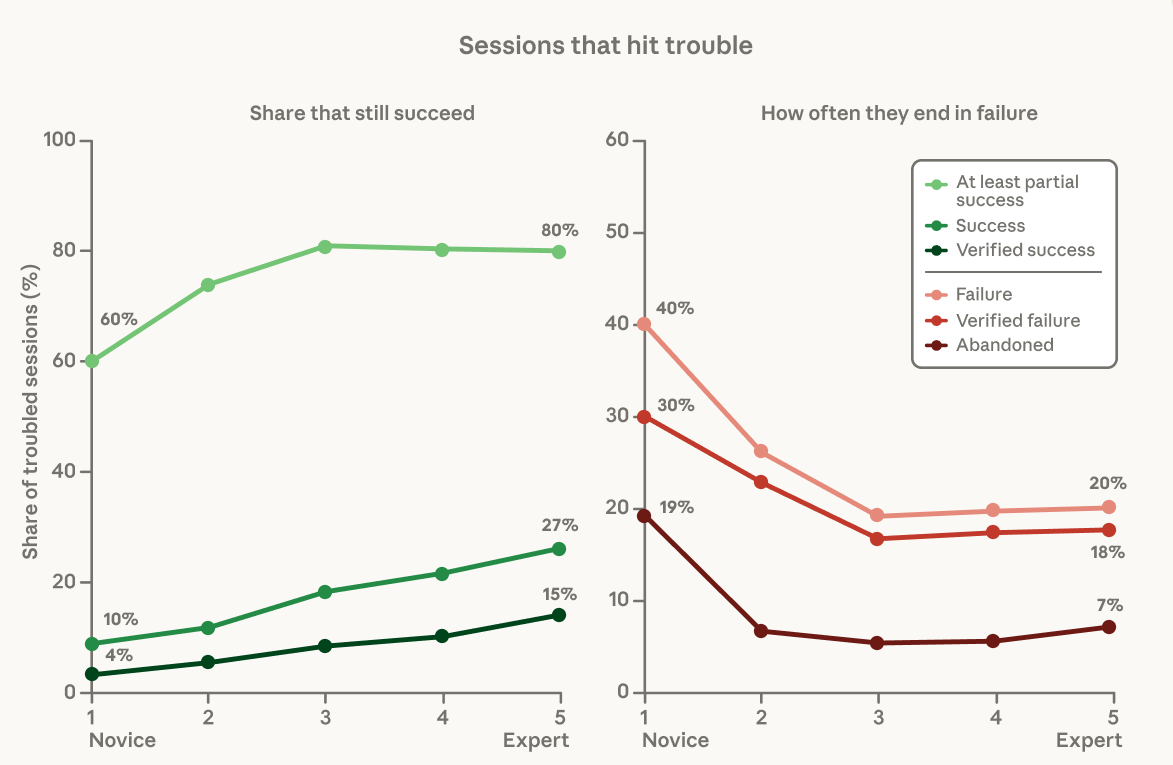
Tell it what you know — which packages we use, which ones are unreliable, what the output should look like, what goes wrong with this kind of dataset.
You are the expert driving the analysis, not Claude.
Hitzig et al. (2026), Fig. 5 (middle and right panels). Sessions with more than three failure signals.
Do you need an LLM at all?
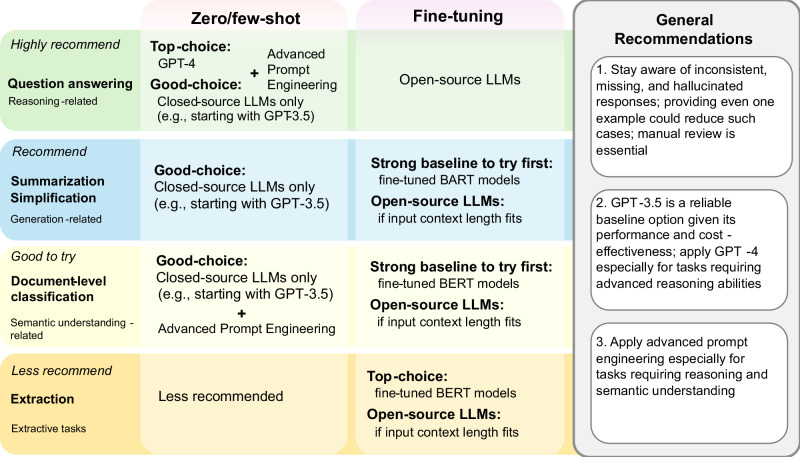
Macro-average, 12 BioNLP benchmarks, GPT-4-era models
| Approach | Score |
|---|---|
| Fine-tuned BERT / BART | 0.65 |
| LLM zero-shot | 0.38 |
| LLM five-shot | 0.48 |
| LLM fine-tuned | 0.51 |
A fine-tuned BERT (~100M parameters) beat LLMs hundreds of times its size on most extraction and classification tasks, and is far cheaper to run.
Chen et al. (2025) Benchmarking large language models for biomedical natural language processing applications and recommendations. Nature Communications 16:3280, Fig. 4 and Table 2. CC BY.
A leaderboard doesn’t necessarily measure your task

100% at competition maths. 29% at finding DE genes.
“Many agents encounter running issues when calling algorithms for batch-effect correction”
Test your own examples
Liu et al. (2026) Benchmarking AI Agents for Addressing Scientific Challenges Across Scales. arXiv:2606.12736, Fig. 1e. SciAgentArena, ~200 tasks.
Running your own models
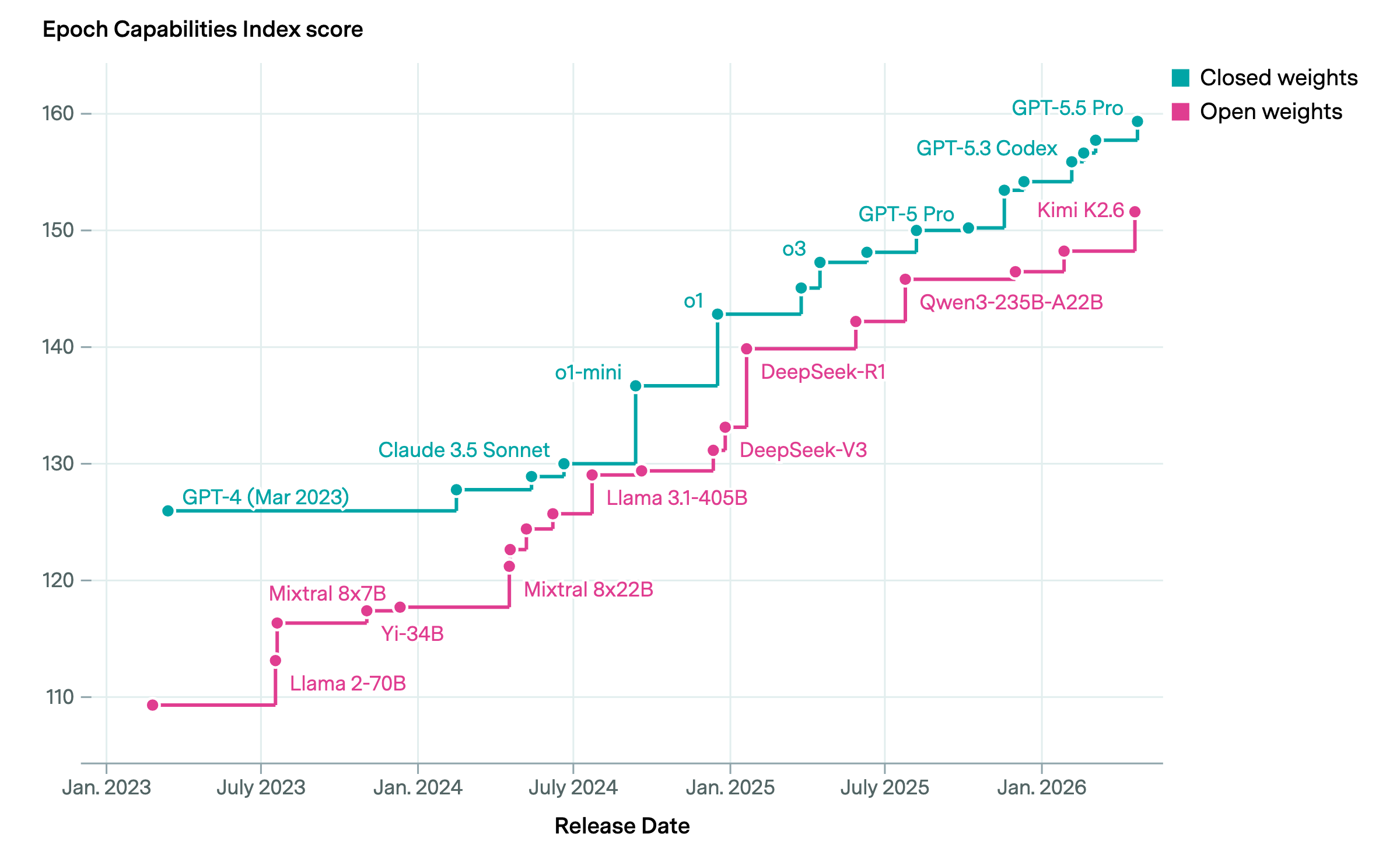
Reasons to run it yourself
- Identifiable data stays in-house (or use synthetic data)
- Same model in five years
- Big repetitive jobs, no bill per request
- Repeatable: archivable weights
Downsides
- Weaker on reasoning and code
- Someone looks after the hardware
Epoch AI (2026) Open models lag state-of-the-art closed models by 4 months
What is an agent?
prompt the model
tools memory files
execution loop and round again, until it stops
verification a result you can check
The model predicts tokens. The harness is everything else, and you can swap either.
 Claude Code
 Codex
Codex
 Gemini CLI
 GitHub Copilot
 Cursor
 OpenCode
Demo — what did the agent do?

A skill changes the output
Without the skill
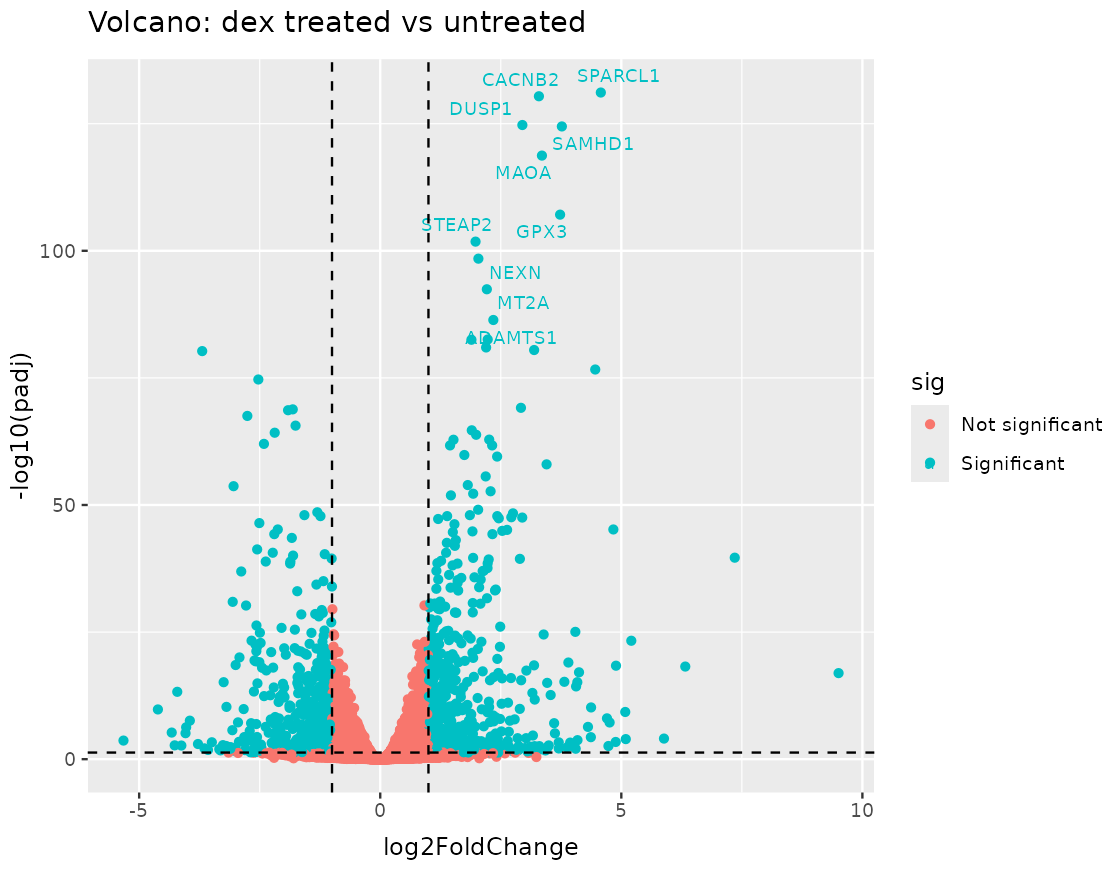
With the CBF visualisation skill
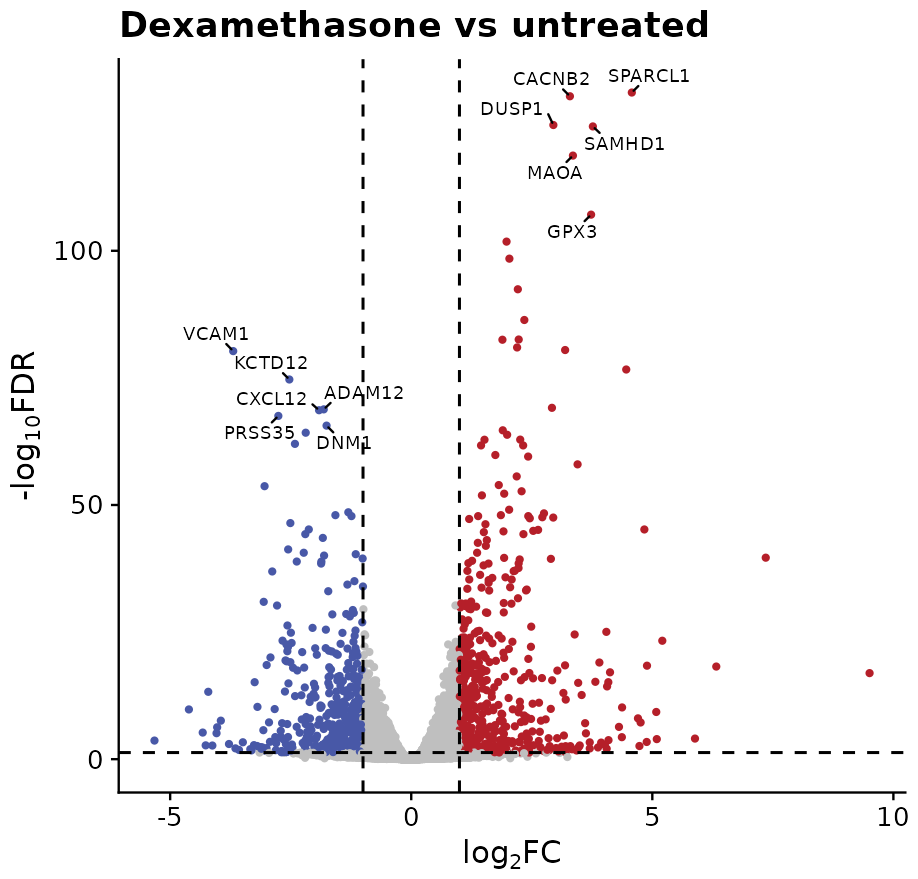
The model writes the code. The skill supplies the local rules.
Spot the problem
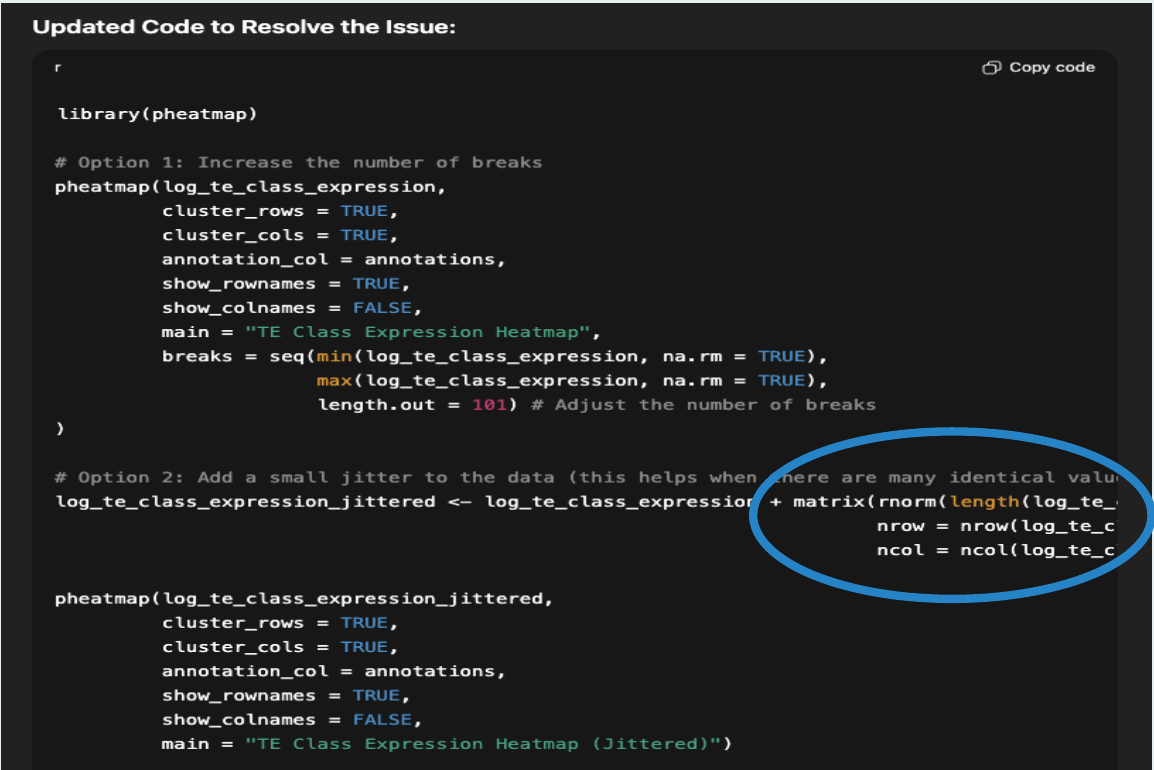
An AI’s fix for a heatmap that wouldn’t draw.
adds random noise to the data.
Other fixes that “work”
- Edits the test until it passes
- Hard-codes the expected output
- Loosens the threshold
- Silently drops IDs that didn’t map
Look at the code, not just the output!
Example from Mohab Helmy, Prompting for biologists (University of Cambridge), via Ana Mariya Anhel
Do I get the right answer each time?
BioMysteryBench: 99 expert-set problems on real data, with answers that can be checked. Each run five times per model.

Most right answers came from 1 run in 5
Anthropic (2026) Evaluating Claude’s bioinformatics research capabilities with BioMysteryBench, Fig. 3
Where is this going?
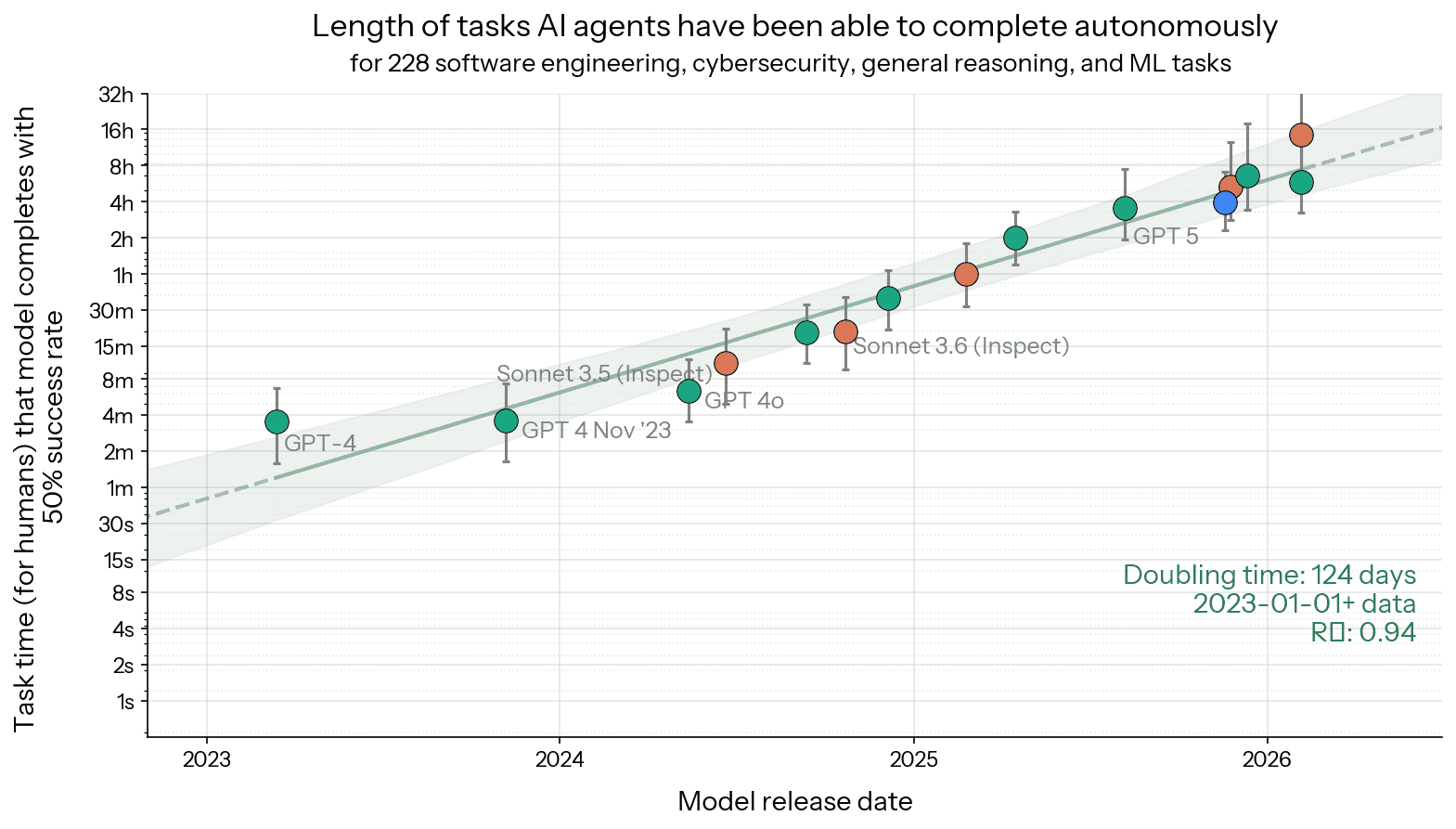
The length of task agents can finish is doubling about every 4 months
Multistep genomics problems: the best model solves 31.5%
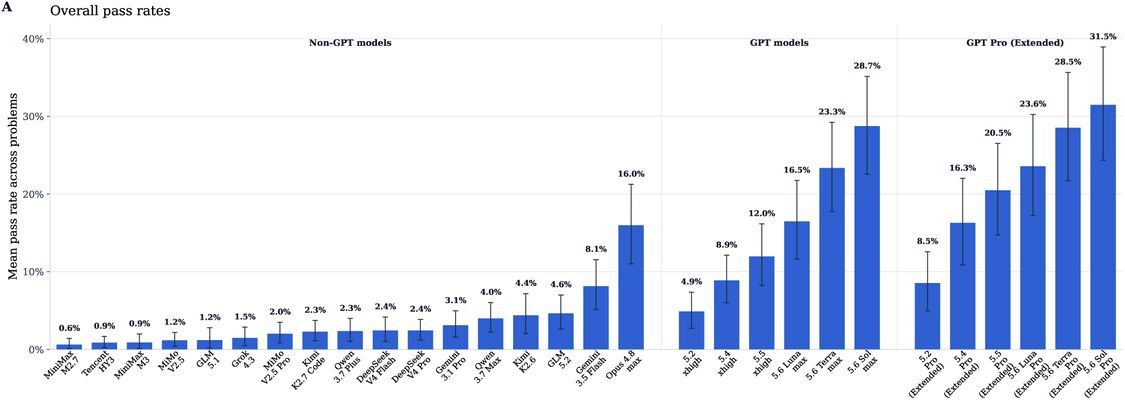
Fast progress, but important to remain cynical about outputs!
Kwa, West et al. (2025) Measuring AI Ability to Complete Long Tasks. METR. arXiv:2503.14499 · Li & Ho (2026) GeneBench-Pro. bioRxiv 2026.06.29.735386, Fig. 5A. 129 multistage problems.
